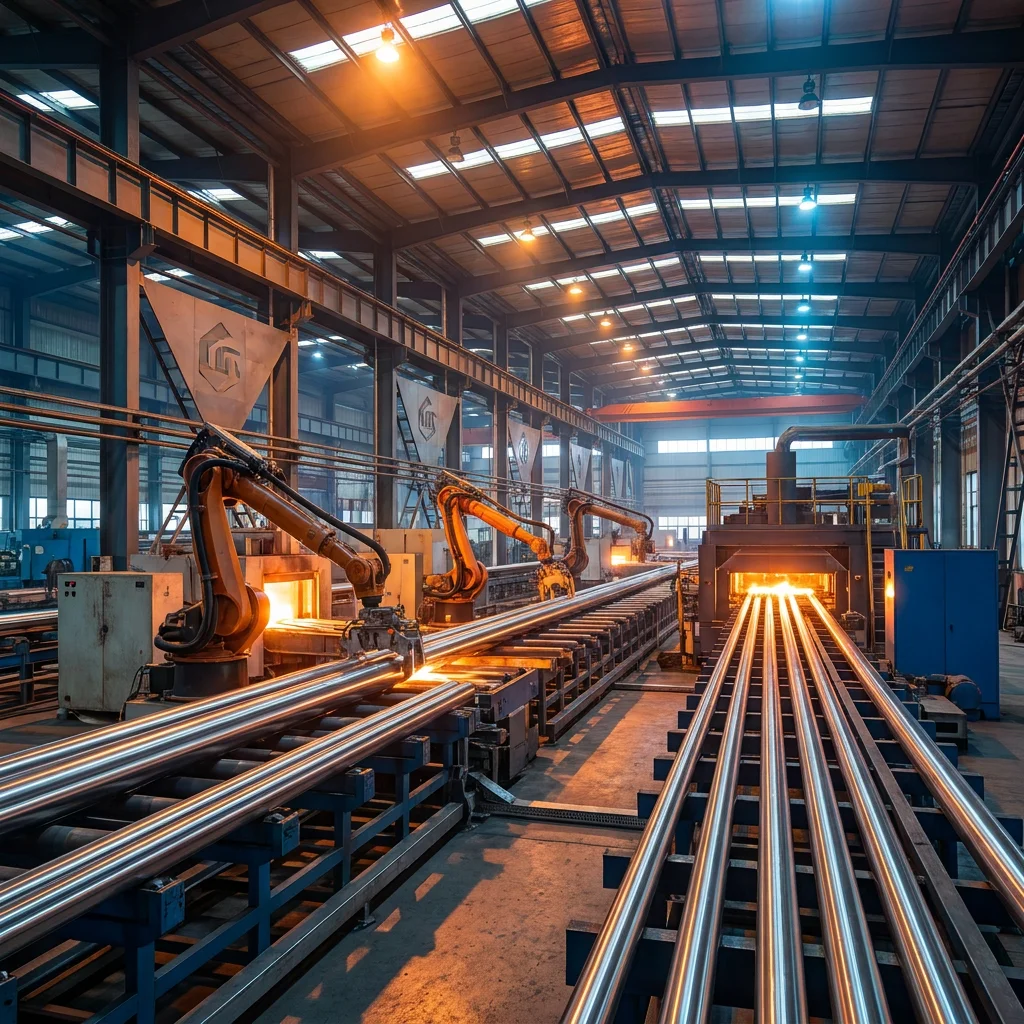

The Green Steel Pivot Strategy: Executive Summary
The Green Steel Pivot is now the defining structural transformation of China’s steel sector. April 2026 data reveals a strategic divergence: while total rolled steel production volume contracted by 1.7% YoY, the industrial value-added of the sector grew by 1.8%. This shift, coupled with a 9.2% decline in finished steel exports, confirms an institutional transition from raw volume output to high-margin specialized production—the “Green Steel Pivot” strategy in action.
2. What Happened?
According to the National Bureau of Statistics (NBS), China produced 122.63 million tons of rolled steel in April 2026, a 1.7% YoY contraction (Source: S001). Crude steel output for the month stood at 83.60 million tonnes. Simultaneously, General Administration of Customs (GACC) data shows finished steel exports fell to 9.50 million tonnes, a 9.2% YoY decline (Source: S002). Despite this volume slump, the steel sector’s value-added increased by 1.8% for the Jan-Apr period (Source: S001), underscoring the success of the Green Steel Pivot.
3. Why It Matters: The “Divergence Anomaly”
This divergence signals that China is successfully decoupling economic contribution from raw tonnage. The +1.8% value-added growth in the face of falling production volume indicates a significant shift toward high-value specialized products—such as robotics-grade alloys and HVLP (High-Value-Low-Production) foils—that command higher premiums. The industry is no longer optimizing for scale, but for strategic industrial utility through the Green Steel Pivot.
4. China Industrial Impact
- Structural Transition: The MIIT’s strict capacity replacement policies are taking hold. The “Green Steel” mandate is prioritizing yield-per-furnace-hour over total output.
- Inventory Overhang: While the pivot to high-value steel is progressing, traditional construction-grade steel is accumulating. Finished steel inventories at major enterprises climbed to 18.77 million mt (up 14.5% YoY) as of mid-May (Source: S003), reflecting a “frozen” domestic property market.
- Pricing Pressure: Domestic steel prices have softened to 3159 CNY/T (down 0.94%), as mills face the dual pressure of high inventories and high-grade raw material premiums.
5. Global Implications
- Export Floor: The 9.2% contraction in Chinese steel exports provides a near-term floor for global prices and reduces the immediate threat of “overcapacity dumping” in secondary markets.
- Competitive Shift: Global producers must prepare for a new tier of competition. China is moving into the premium alloy and specialized steel segments, directly challenging the market share of high-end European and Japanese mills with its Green Steel Pivot.
6. The Role of Policy in the Green Steel Pivot
The central government’s focus on high-quality development is the primary driver behind this transition. By restricting credit to older, high-pollution mills and providing subsidies for green-tech integration, Beijing is effectively forced-marching the industry toward a more sustainable future. This “Green Steel Pivot” is not merely about environmental compliance; it is a strategic move to ensure the longevity of China’s industrial base in a carbon-constrained global economy. As international trade partners increasingly implement carbon border adjustments, the early adoption of these green standards will give Chinese exporters a significant competitive edge. For more insights into China’s industrial strategy, visit China Market Pulse.
7. Long-term Strategic Outlook: Sustaining the Green Steel Pivot
The Green Steel Pivot is not a temporary adjustment but a long-term strategic reallocation of resources. As China continues to integrate advanced AI-driven manufacturing into its metallurgical processes, the efficiency of “green” furnaces will likely surpass traditional methods. This transition is essential for China to meet its carbon neutrality goals while maintaining industrial dominance. Investors and global competitors should view the current volume contraction as a sign of strength, not weakness, as the value-added metrics continue to climb.
8. What to Watch Next
- June Inventory Flush: Watch for aggressive liquidation of traditional grades as major mills face the highest mid-May inventory levels in three cycles.
- HVLP Standards: Monitor for upcoming MIIT directives in Q3 2026 defining the new national standards for high-value industrial foils and robotics alloys.
Source Intelligence & Verification
- S001: National Bureau of Statistics (NBS) – April 2026 Industrial Performance.
- S002: General Administration of Customs (GACC) – April 2026 Export Statistics.
- S003: China Iron and Steel Association (CISA) – Mid-May Production & Inventory Report.
- Verification Status: VALIDATED & TRACEABLE (Orion Audit Complete).